
Choosing a cooking approach
Start by identifying whether you are cooking an intact bird or separate cuts: breasts, legs and joints respond differently to heat. Species, carcass size, skin and bone also shape which approach is suitable. Consider the texture and appearance you want, such as browned skin, neatly sliced breast or soft meat from slower cooking. British Game Meat Guide is an independent English information guide, not a retailer or food service.
Match the method to the bird and cut
Begin by identifying whether the bird is intact, jointed or reduced to breasts or legs: those forms expose different amounts of meat and bone to heat. Species and size matter too; a compact partridge and a larger pheasant do not behave like a skin-on duck breast.
- A whole pheasant has a substantial central carcass; roasting is a familiar option when you want the bird presented intact and its skin browned.
- A small partridge has less meat and a compact frame, so choose an approach suited to its size rather than transferring a large-bird plan unchanged.
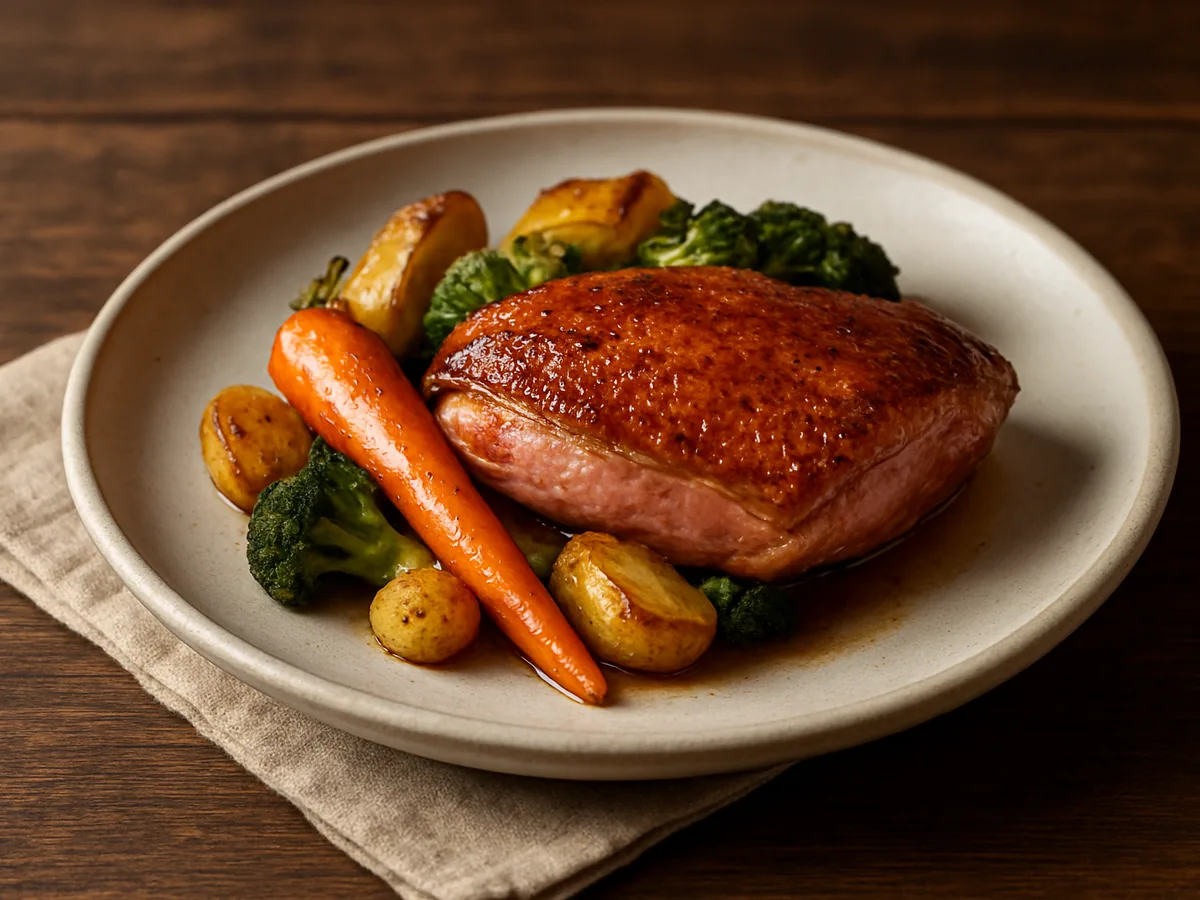
- Duck breast is a distinct cut with skin and a thick layer of fat; pan-cooking can suit a result built around crisp skin and sliced meat.
- Bone-in portions cook differently from boneless cuts because bone affects the shape and thickness of each piece; account for that when choosing a method.
- A boneless breast is relatively uniform and easy to portion, making direct, shorter cooking more practical than treating it like a whole carcass.
- Legs and other working muscles are firmer than breast meat; moist, slower methods such as braising can suit them better than brief dry-heat cooking.
Use these distinctions to select a method, not a fixed timetable: thickness and bone placement affect cooking pace even within one species. Check the relevant species guidance for instructions tailored to the bird or cut.
Choose for the intended dish
Plan around the finished dish and the texture you want. A traditional roast calls for an intact bird and an approach that develops colour across its surface, while a quick meal of tender slices is easier to build around a breast cut. For a stew or another spoonable dish, choose a cut and method suited to sustained moist heat rather than expecting a dry-heat roast to produce the same soft texture. If crisp skin matters, keep the skin-on form in view; if easy portioning is the priority, a boneless cut may be more convenient. These are starting points, not interchangeable instructions: species and cut affect the details. Follow the pheasant guidance for a whole bird or breast, the partridge guidance for its smaller carcass and cuts, and the duck guidance for breast or Barbary duck. Choose the closest match to the piece you have before cooking.
Pheasant cooking methods
Pheasant is a lean bird, so the cut and cooking method both affect the finished texture. If you are deciding how to cook pheasant, begin by identifying whether you have a whole bird or separate breasts. Careful preparation helps the meat cook evenly, while attentive roasting or breast cooking helps preserve moisture. Follow current UK food-safety guidance when checking that pheasant is ready to serve.
Prepare whole pheasant and breasts
Start by checking the cut and its condition, then prepare it for the method you have chosen. These steps help the bird or breast cook evenly and give seasonings a dry surface to cling to.
- For a whole bird, check the cavity and skin for any remaining feathers or loose material, and make sure the bird is ready for the intended recipe.
- For breasts, identify the skin side and inspect the meat for sinew or ragged edges; trim only what would interfere with even cooking.
- Pat the surface dry with kitchen paper, including around the breast skin, so excess moisture does not hinder browning in a pan or roasting dish.
- Bring the cut together into an even shape where practical; fold thin breast ends under so they are less likely to cook faster than the centre.
- Season the bird or breasts as the chosen method requires, distributing salt and herbs across exposed surfaces rather than concentrating them in one spot.
- For roasting, prepare the whole bird with any aromatics specified in the recipe; for pan cooking, keep the breasts flat and ready to place skin-side down.
A whole pheasant and its breasts need different preparation: keep the bird intact for roasting, but trim breasts neatly for direct, even contact with the pan.
Roast a whole pheasant
For a whole roast, season the prepared pheasant and set it breast-side up in a roasting dish, with enough space around it for hot air to circulate. A little butter or oil over the breast can support browning; a few herbs or aromatics in the cavity add flavour without changing the bird’s shape. Avoid packing the dish tightly with vegetables, which can impede heat circulation and make it harder to monitor the bird. Check progress during roasting rather than relying on a fixed time: bird size, starting temperature and oven performance all affect how quickly it cooks. Look for evenly coloured skin and a breast that feels firm but still yields slightly when pressed; these are quality cues, not a substitute for checking safe doneness. Use a food thermometer and follow current UK Food Standards Agency advice for the appropriate check. If the skin colours faster than the rest of the bird, shield it loosely with foil while cooking continues. When ready, transfer the pheasant to a warm plate and rest it before carving. Resting allows the juices to settle, making slices less likely to lose moisture on the board.
Cook pheasant breasts and retain moisture
Pan-cooking suits evenly trimmed pheasant breasts because it gives direct control over browning. If the skin is on, begin skin-side down in a moderately heated pan so the fat can render and the skin can colour; turn the breast to finish the other side. For skinless breasts, add a little oil or butter to prevent sticking and turn as needed for even cooking. Avoid crowding the pan, since a sudden drop in heat can leave the meat pale and unevenly cooked. Breast thickness matters: breasts of similar size are easier to cook together, while a thicker piece may need a gentler finish after browning. Grilling is another option, but lean pheasant can dry quickly over intense direct heat; use an even, controlled heat and avoid leaving thin pieces on the grill as long as thicker ones. A covered pan finish or a moist accompaniment can help retain tenderness without masking the bird’s flavour. Rest the cooked breasts briefly on a warm plate before slicing across the grain. Look for a browned exterior and meat that remains juicy rather than stringy; use a thermometer and current official guidance to confirm safe readiness, not colour alone. A sharp knife and thin slices also make the breast feel more tender at the table.
Serve pheasant safely
Serve pheasant only after checking that it has been cooked thoroughly, using the current UK Food Standards Agency guidance for poultry and game birds. Follow its recommendations for checking doneness rather than relying on a browned surface or a particular appearance alone; bird size and cooking method can affect what you see. If using a food thermometer, follow current official advice on where and how to take the reading, without applying a temperature from a different country’s guidance. Keep cooked pheasant protected from contact with raw meat and use clean utensils and serving plates. Consult the Food Standards Agency’s current guidance for safe handling, cooking and serving recommendations, since official advice may be updated.
Partridge recipe ideas
Partridge’s compact size makes it well suited to roasting whole, while individual portions can be cooked more quickly using direct heat. A useful recipe guide covers preparation, roasting and alternative methods, then shows how to match flavours to the bird. Check whether each recipe is written for a whole partridge or for separated portions before measuring ingredients or setting the cooking method. Small differences in cut affect cooking time and texture, so follow directions for the portion you have. The ideas below help you adapt a recipe without losing sight of the bird’s delicate flavour.
Prepare partridge for cooking
Begin by checking the recipe’s intended format: a whole partridge, a crown with the legs removed, or separate breasts and legs. These are not interchangeable portions. A whole bird cooks with the breast and legs together, while a breast-only recipe is designed for a thinner piece that cooks rapidly. If the instructions name a particular cut, confirm that it matches what you have before following its timings or ingredient quantities.
For a whole-bird recipe, remove any packaging and check the cavity for loose contents, then trim away ragged skin or excess fat as directed. Pat the surface dry if the recipe calls for browning or crisp skin. For separated portions, keep the pieces as uniform in size as practical so they cook at a similar rate; leave breast meat intact unless the recipe asks for slices or strips. Read the full method before seasoning: a marinade, stuffing or covered cooking stage may need to happen before the pan or oven is heated. Note whether the recipe uses a lidded casserole, roasting tin or uncovered pan, since those choices change how moisture and surface colour develop.
Roast partridge and use other methods
Roasting is a straightforward choice when the recipe calls for a whole partridge and you want the breast and legs presented together. Follow the recipe’s oven setting and timing for the bird’s size rather than borrowing directions for a larger game bird. A roasting tin allows the exterior to colour, while a covered casserole retains more moisture and is better suited to a recipe that includes liquid or vegetables. If the instructions call for turning or basting, keep to their schedule so the bird cooks as intended.
Other methods suit particular portions. Pan-cooking works well for breasts because the exposed surface colours quickly and the meat needs less time than a whole bird. Grilling also suits separated breast portions, provided they are thick enough to handle direct heat without becoming difficult to turn. Legs benefit from moist, slower cooking in a covered pan or casserole, which gives connective tissue time to soften; use the recipe’s liquid and cooking time rather than applying a quick breast method. A recipe may also combine techniques, such as browning portions before finishing them gently in a sauce.
Assess the finished dish against the recipe’s cues: look for the stated colour and texture, and check that a leg moves easily where the method calls for tender meat. Let roasted portions rest for the interval specified before carving, so juices settle rather than running onto the board. The best method is the one matched to the cut, not simply the fastest option.
Pair flavours and adapt recipes by cut
Partridge’s mild, savoury flavour works with seasonal fruit, herbs, earthy vegetables and gentle acidity. Use pairings that complement the bird rather than masking it, and make small changes when a recipe moves from a whole bird to separate portions.
- For a whole roast, use thyme, sage or juniper with apple or pear; keep aromatics in the cavity or roasting tin so they perfume the bird without overwhelming it.
- For breasts, pair a brief pan-cook with mushrooms and a light cream or mustard sauce; reduce the cooking time compared with instructions for a whole bird.
- For legs, choose root vegetables, stock and rosemary in a covered braise; allow more gentle cooking than a breast recipe requires.
- For grilled portions, try lemon zest, black pepper and a little oil; apply a thin coating so the surface browns instead of steaming.
- For a crown or other mixed cuts, cook the pieces according to their size and thickness, then combine them with a sauce or seasonal vegetables at serving.
When adapting a recipe, keep its flavour profile but adjust the preparation and method to suit the portion: a whole bird may need cavity aromatics, while boneless breasts do not. Use the recipe’s instructions as a starting point, but do not transfer whole-bird timings to smaller cuts. For mixed portions, separate cooking stages can prevent tender breast meat from being held in the heat while firmer legs finish. This cut-by-cut approach keeps the seasoning coherent while giving each part the cooking treatment it needs.
Duck breast and Barbary duck
Duck guidance depends on whether you are choosing a kind of bird or cooking a particular cut. Barbary duck refers to a type of duck, while duck-breast roasting instructions focus on one portion and its skin, fat and cooking sequence. The distinction matters because the bird’s characteristics inform what to expect, but the breast’s thickness and preparation shape the roasting method. Use the guide that matches the question in front of you.
Barbary duck as a type
Barbary duck, also known as Muscovy duck, is a distinct domestic duck type rather than a cooking cut. It differs from the mallard-derived domestic ducks commonly sold as Pekin or Aylesbury: Muscovy ducks have a longer, broader body, and their meat is often described as lean and relatively dark. Birds vary in size, so the proportions of breast, legs and fat are not identical from one bird to another. These characteristics help explain why a recipe written for one kind of duck may not translate exactly to another.
Guidance about Barbary duck is useful when you are identifying the bird, considering its typical build and choosing how to use it whole or in portions. It can help set expectations about the meat and the way the bird differs from more familiar domestic ducks. It is not, by itself, a step-by-step method for roasting a duck breast: that is a cut-specific task involving the breast’s thickness, skin and fat layer. For cooking, check the actual portion rather than relying only on the type name. A large breast and a small breast will not reach the same result in the same time, even when both come from Barbary ducks.
Roast duck breast as a cut
Roasting duck breast starts with the portion, not the breed. Pat the skin dry, then score it in a shallow crosshatch, spacing cuts about 5–10 mm apart; stop at the fat rather than slicing into the meat. This helps fat escape during cooking while keeping the breast intact. Trim any loose edges, but leave an even layer of skin and fat to protect the meat and support crisping.
A common approach is to begin skin-side down in a cool, dry frying pan, letting the fat render gradually for around 6–10 minutes. Pour off excess fat as it collects, then turn the breast briefly to colour the flesh side. Transfer it to an oven preheated to about 200°C (180°C fan) for roughly 8–12 minutes, adjusting for thickness and the finish required; these timings are a starting point, not a guarantee. The skin should be well browned, with much of its surface fat rendered rather than soft and rubbery.
Rest the breast for 5–10 minutes before slicing across the grain. Resting allows the meat to settle and makes neat slices easier; serve promptly so the skin retains its crisp texture. Judge the technique by an evenly coloured surface, rendered skin and a moist, tender texture, while using appropriate current poultry guidance to determine safe doneness.
Choose the relevant duck guide
Choose according to whether your question concerns the bird’s type or a particular breast cut. The comparison below separates those needs and gives a typical roasting reference; breast thickness and oven performance affect timing.
| Subject | Scope | Reader need |
|---|---|---|
| Barbary (Muscovy) duck | Type characteristics, including its darker, leaner meat and broad build | Identify the bird by how its type differs from other domestic ducks |
| Duck breast as a cut | Preparing the skin, rendering fat, oven cooking and resting | Roast a breast portion; a typical starting point is 200°C conventional heat |
| Roasting time for breast | Cut-specific timing, adjusted for thickness and desired result | Allow around 8–12 minutes in the oven after browning, then rest 5–10 minutes |
Barbary-duck guidance identifies the kind of bird; breast-roasting instructions apply when the portion on your board is specifically a duck breast.
Preparation and food safety
Good results with game birds begin before the pan or oven is ready: preparation determines whether you cook a bird whole or work with separate portions. Pheasant plucking and dressing involve removing feathers and internal parts, while cooking is a separate stage that applies heat. Keep raw-bird handling distinct from serving and ready-to-eat food. For current advice on storage, hygiene and cooking checks, follow recommendations from the UK Food Standards Agency (FSA).
Pluck and dress pheasant
A pheasant plucking and dressing guide takes you through preparing a bird before it reaches the kitchen. Plucking removes the feathers while leaving the skin on; skinning removes the skin as well, so the choice affects the bird’s condition and how you plan to use it. Start by checking the bird’s exterior and identifying any feathers, damaged areas or shot-affected tissue that need attention.
For plucking, work methodically in small areas, holding the skin taut and easing out feathers rather than tugging hard. This helps limit tearing, particularly around the breast and thighs. Once the larger feathers are removed, deal with remaining small feathers and pinfeathers, then check the surface again. The guide can also explain how to remove the head and feet when required by the intended preparation.
Dressing means opening the body cavity and removing the crop and entrails; it is not the same as trimming or seasoning the meat. Remove any damaged tissue identified during inspection and prepare the bird in the form needed for the recipe, whether whole or portioned. The guide focuses on these physical preparation stages, so you can distinguish a cleaned, dressed pheasant from one that has already been cooked.
Keep preparation separate from cooking
Dressing makes a pheasant ready for cooking; it does not make the meat safe to eat or determine how tender the finished dish will be. Plucking, removing the entrails and trimming are preparation tasks. Roasting, braising or cooking portions in a pan are heat-based methods carried out afterwards, with a recipe guiding the choice for the bird and cut.
After dressing, consider whether the recipe calls for a whole bird or separate portions, and follow its preparation instructions before applying heat. A whole pheasant and a breast portion are not interchangeable in a recipe: their shape and size affect how they cook. Likewise, seasoning or adding a marinade changes flavour, but it is not a substitute for cooking the meat thoroughly.
Move from preparation to cooking with clean equipment and a clear work area, keeping raw meat and its juices away from food that is ready to eat. Choose the method and doneness checks specified in a reliable recipe, then handle the cooked bird with clean utensils. This separation makes each stage easier to manage and prevents preparation steps from being mistaken for cooking instructions.
Follow current UK food-safety guidance
Use the UK Food Standards Agency’s current advice for handling and cooking poultry, including game birds. These practical steps cover storage, separation and checks without relying on a cooking time or temperature that may not suit every bird.
- Keep raw pheasant chilled, follow the storage instructions on its packaging, and check any use-by date before preparing the bird.
- Store raw meat covered on the bottom shelf of the refrigerator, below ready-to-eat foods, so leaks cannot contaminate other items.
- Thaw frozen pheasant in the refrigerator, allowing it to defrost fully before cooking; keep it contained so liquid cannot drip onto other food.
- Use separate boards and utensils for raw bird and ready-to-eat food, or wash them thoroughly with hot, soapy water between tasks.
- Do not wash raw poultry under a tap: splashes can spread bacteria around the sink, worktop and nearby utensils.
- Check that cooked meat is steaming hot throughout, with no pink meat remaining and juices running clear; use FSA guidance for any thermometer checks.
Wash hands with soap and water after touching raw bird, and clean surfaces and equipment before using them for other ingredients. Check the FSA’s latest guidance whenever its recommendations change.